HIV, Sickle cell & Malaria Integration Training: By Microheam Scientifcs
Program Updates, Testing Strategies, and Kit Rollout
UMLTA secretariat - Muyingo Yusuf
3/31/20264 min read
Overview of the Multi-Disease Integration Training
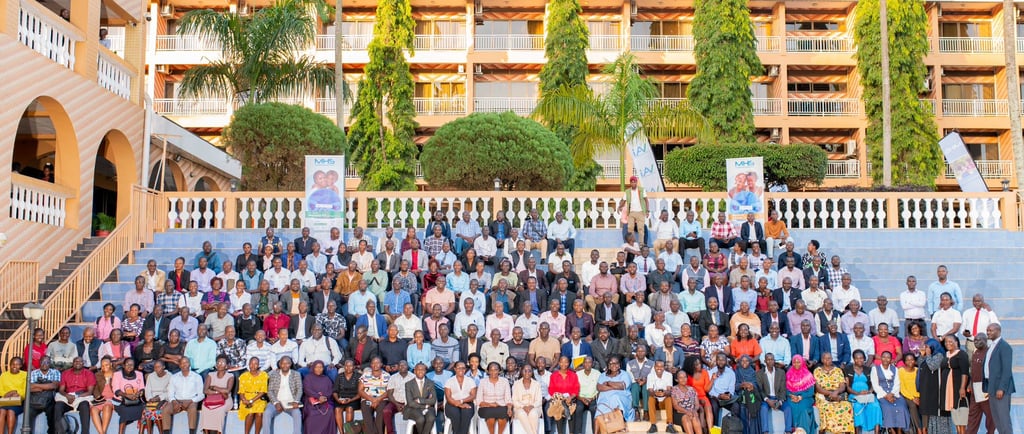
A multi-district training workshop focused on HIV Testing Services (HTS), Sickle Cell and malaria program updates was attended by key stakeholders, including the Mr. Muyingo Yusuf (Secretary General UMLTA), Ms. Kisaakye Maureen (Deputy Treasurer), and Ms. Babirye Damali (Publicity of UMLTA). The session was led by Andrew Tebba, The Technical Lead Trainer at MHS.
Objectives and Central Theme
The training aimed to standardize guidelines across districts, update staff on kit rollout including micro screens, HIV quick tests, and malaria kits and align efforts with policy directions. A key focus was moving away from vertical HIV/TB/malaria programs toward a more integrated care delivery model. Post-training, regional supervision teams are expected to visit districts approximately two weeks after Easter.
HIV TESTING SERVICES (HTS): PROGRAM DATA AND PERFORMANCE
Progress Toward 95-95-95 Targets
Despite progress, several gaps remain:
- Overall national scores stand at 94%, 88%, and 89%.
- Among children aged 0–9, only 61% know their HIV status, far below the 95% target.
- Linkage to care for 15–19-year-olds is at 90.9%, indicating room for improvement.
- Notably, linkage for 20–24-year-olds exceeds 100%, highlighting high engagement in this group.
Trends in HIV Testing Volume
Testing volumes declined from over 2.6 million in April–June 2024 to just under 2 million in October–December 2025, attributed to funding cuts and stop-work orders affecting kit distribution and health worker availability.
Positivity Rates and Demographic Insights
- Females tested in late 2024 showed a positivity rate of 1.3%, whereas males had a higher rate of 1.7%.
- The positivity rate among children under 5 increased from 1.24% to 1.71%, indicating a rising trend.
- High-burden regions such as Ankole, Kampala, and North Buganda report positivity rates above the national average.
Focus on Adolescents & Youth
There has been a slight decline in new HIV infections among youth from 2020 to 2024, but positivity among females aged 10–24 remains high, underscoring the need for targeted interventions.
HIV TESTING MODALITIES & INNOVATIONS
Index Client Testing
This high-yield modality saw an increase from 46,266 to 60,000 visits, with significant improvements in partner testing positivity rates, especially among females.
HIV Self-Testing
Distribution increased from about 147,255 kits in late 2024 to over 164,000 in late 2025. Most kits are distributed in the community, reaching hard-to-reach populations, though results need confirmatory testing at certified facilities.
Social Network Strategy (SNS)
Index clients are encouraged to recruit peers, focusing on key populations such as MSMs and FSWs, with peer navigators facilitating confidential testing.
HIV TESTING QUALITY ASSURANCE & CERTIFICATION
Tester Certification
Testers undergo training with an 80% pass mark, and certificates are valid for two years. Facilities and testers lacking certification are flagged for follow-up, with oversight by UVRI.
Site Accreditation
Facilities are audited, and those scoring above 90% receive certification. Some sites lack certificates, prompting follow-up actions.
THE HTS 5 CS POLICY FRAMEWORK
The framework emphasizes:
- Consent: Mandatory for clients aged 12 and above.
- Confidentiality: Ensuring private testing environments.
- Counseling: Pre- and post-test support to reduce stigma.
- Correct Results: Emphasizing accuracy in testing.
- Connection/Linkage: Ensuring timely linkage to care within specified timeframes.
STRATEGIC PRIORITIES & PROGRAM SHIFTS
Testing Focus
The shift prioritizes first 95 (knowing HIV status), emphasizing targeted testing over mass campaigns, especially among children, adolescents, males, and key populations.
Integration Model
Moving from vertical HIV clinics to integrated care involves training all health workers to deliver comprehensive services. Electronic medical records and patient identifiers are being introduced to streamline care.
Resource & Funding Context
External funding is decreasing, prompting increased domestic investment. The integration approach is partly a response to staffing and funding limitations.
MALARIA PROGRAM UPDATE
Malaria Burden and Trends
Malaria continues to be a significant health challenge, with prevalence rising from 9% to 13%. The disease disproportionately affects children aged 5–15 years and accounts for a substantial portion of outpatient visits and hospital admissions.
Control Strategie
Key interventions include:
- Community case management via VHTs.
- Distribution of insecticide-treated nets (ITNs).
- Indoor residual spraying (IRS).
- Larval source management in high-incidence areas.
- Malaria in pregnancy prevention through IPT.
- RTS,S vaccine rollout.
- Social behavior change communication (SBCC).
Coverage Indicators and Challenges
While private sector testing approaches 99%, testing at public health facilities and community levels remains below target, with current rates at 88% and 87%, respectively. There is a discrepancy between testing and treatment rates, highlighting diagnostic challenges.
KEY QUESTIONS & CLARIFICATIONS
Participants raised concerns about data linkage, self-test quality, kit types, funding impacts, and program impact analysis. Emphasis was placed on the importance of including laboratories in ICCM activities and ensuring proper diagnostic quality.
ACTION ITEMS
Key follow-up actions include:
- Revising EQA assessments to match facility practices.
- Integrating laboratory professionals into ICCM.
- Ensuring funding for training and quality assurance.
- Strengthening commodity supply chains.
- Developing re-education strategies for VHTs.
- Finalizing guidelines for AKI management.
- Continuing research on AI-based RDT interpretation.
- Advocating for district-level resource allocation.
MALARIA DIAGNOSTICS & VHT COMMODITIES: CHALLENGES & INNOVATIONS
Quality of Diagnostics
The focus on thick smear microscopy remains critical, with shortages of slides and issues with RDT interpretation errors. An AI-based RDT reading system is under development to improve accuracy.
Community Case Management & VHTs
Labs are often excluded from ICCM, leading to compromised results. VHTs face motivation and commodity management challenges, necessitating clear re-education and supply mechanisms.
District Funding & Resource Gaps
Decentralization has improved human resource management but not funding. Advocacy is needed for proper resource allocation, especially for training and supplies.
CONCLUSION
The integrated approach to HIV and malaria programs, combined with quality assurance, community engagement, and resource mobilization, is vital for achieving health targets in Uganda. Continuous training, supervision, and innovation will be key to overcoming current challeng
UMLTA
PAYMENTS
All payments should be made to:
UGANDA MEDICAL LABORATORY TECHNOLOGY ASSOCIATION
Account No. 9030000251924
Stanbic Bank-Wandegeya Branch Kampala
USING FLEXI PAY:
Dail *291#
Select pay merchant
Enter code: 247204
CONTACT
CHIEF SCIENTIFIC EDITOR
Email: editor@eumlta.com
Tel: +256 772 432358
THE PRESIDENT
Email: president@eumlta.com
Tel: +256 776 207089
THE SECRETARY GENERAL
Email: secretarygeneral@eumlta.com
Tel: +256 773 732537
Copyright © 2026 Uganda Med Lab Tech Prof Ass website.eumlta.com
PAY/RENEW YOUR MEMBERSHIP @50000 UGX
PAY ANNUAL SUBSCRIPTION @ 30000 UGX